Instead of waiting for smoke, heat or flames, the system produces oxygen-reduced air, continuously monitors oxygen levels and maintains an engineered low-oxygen environment in which common combustible materials are far less likely to ignite.
The result is proactive, 24/7 fire prevention designed to protect critical assets, infrastructure and operations before a fire can develop.
How Does the FirePASS® System Work?
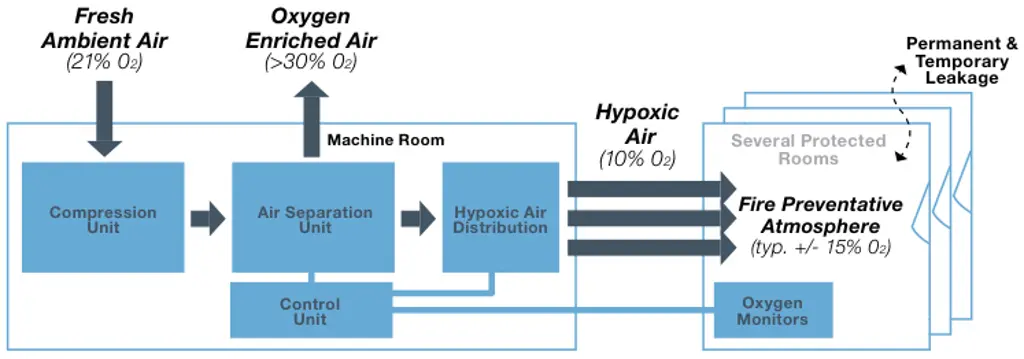
The FirePASS® system creates and maintains a controlled oxygen-reduced atmosphere within the protected environment. The process is continuous: air is conditioned, oxygen levels are monitored and the system automatically maintains the required operating conditions.
1. Ambient Air Enters the System
FirePASS® uses normal ambient air as the basis for creating the protected atmosphere. Rather than storing large quantities of extinguishing agents, the system processes air to produce the required oxygen-reduced environment.
2. Oxygen-Reduced Air Is Produced
The FirePASS® system reduces the oxygen concentration of the incoming air. The resulting oxygen-reduced air is then supplied to the protected room or facility.
The objective is to create an atmosphere with sufficient oxygen for the designed operating conditions while reducing the oxygen available for combustion.
3. The Protected Environment Reaches Its Engineered Oxygen Level
As oxygen-reduced air is introduced, the oxygen concentration inside the protected environment gradually reaches its engineered setpoint.
The required oxygen level is not identical for every application. It depends on factors including the combustible materials present, room characteristics, occupancy and the specific fire protection design.
4. Oxygen Levels Are Continuously Monitored
Continuous oxygen monitoring is an essential part of the FirePASS® concept. Sensors measure oxygen concentrations within the protected environment and provide information to the system controls.
This allows the system to continuously verify and regulate the protected atmosphere.
5. The System Maintains Continuous Fire Prevention
Once the required conditions have been established, FirePASS® continuously maintains the protected atmosphere.
Instead of remaining inactive until a fire alarm occurs, the oxygen reduction system provides 24/7 active fire prevention. The controlled oxygen concentration creates conditions in which many common combustible materials are significantly less likely to ignite.
This is the fundamental principle behind FirePASS®: reduce the risk of ignition before conventional fire suppression becomes necessary.
How Does Reducing Oxygen Help Prevent Fire?
Fire requires three essential elements: fuel, heat and sufficient oxygen. This relationship is commonly represented by the fire triangle. Conventional fire protection often focuses on detecting and controlling a fire after ignition. Oxygen reduction takes a different approach by continuously controlling the oxygen available for combustion. When the oxygen concentration is reduced to an engineered level, many common combustible materials become significantly more difficult to ignite and sustain combustion. FirePASS® uses this principle to create a continuously protected environment, reducing the probability that an ignition source will develop into a damaging fire.

Frequently Asked Questions About How Oxygen Reduction Works
An oxygen reduction system continuously produces oxygen-reduced air and supplies it to a controlled protected environment. Oxygen sensors monitor the atmosphere while the system regulates conditions to maintain the engineered oxygen concentration. This reduces the oxygen available for combustion and makes many common materials significantly more difficult to ignite.
No. FirePASS® does not create an oxygen-free environment. The system reduces the oxygen concentration to a carefully engineered level determined by the specific application, materials, operating conditions and fire protection requirements.
No. One of the main differences between oxygen reduction and conventional fire suppression is that the protective atmosphere is maintained continuously. FirePASS® therefore provides active fire prevention before an ignition event occurs rather than waiting for a fire alarm before providing protection.
FirePASS® uses oxygen monitoring and system controls to continuously measure and regulate conditions within the protected environment. Oxygen-reduced air is supplied as required to maintain the specified operating range.
No. FirePASS® oxygen reduction fire prevention uses oxygen-reduced air produced from ambient air rather than water or chemical extinguishing agents. Ambient air is processed to create oxygen-reduced air, which is continuously supplied to the protected environment while oxygen sensors and system controls maintain the specified conditions.
Because prevention-mode protection does not rely on sprinkler discharge or chemical extinguishing agents, it can help avoid water damage, chemical residue and the cleanup associated with those suppression methods.